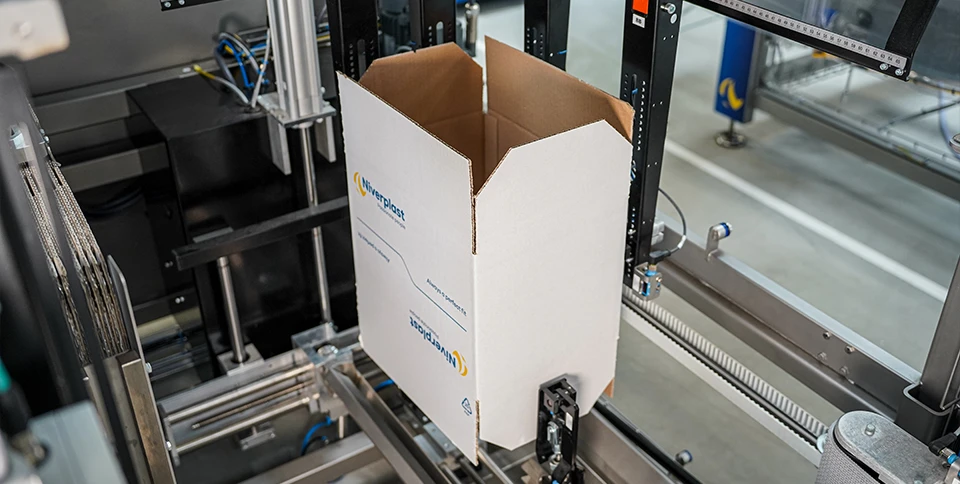
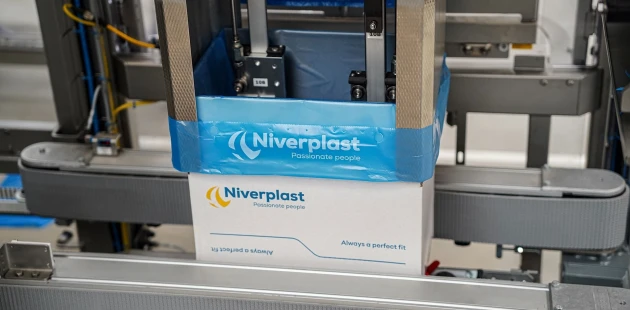
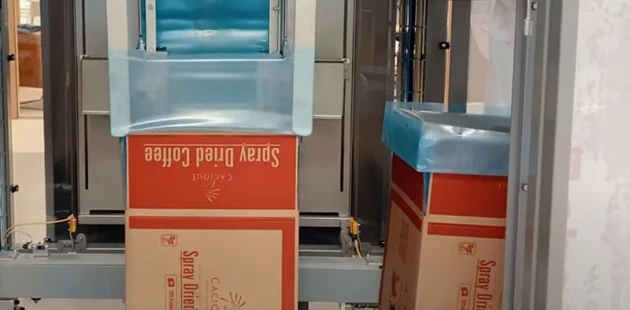
Case erecting and bag placing
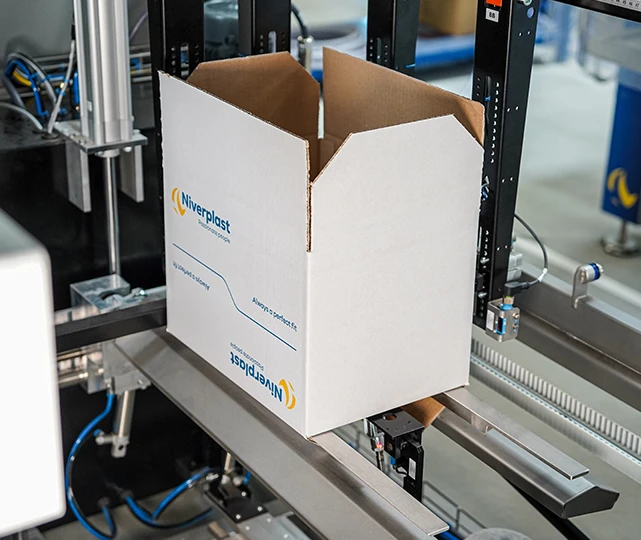
Case erecting and bag placing, how to automate two critical packaging steps in one smart process
In many packaging environments, efficiency is won or lost before the product even enters the box. If cases are not erected consistently, or bags are not placed neatly and reliably, the rest of the line has to work harder to compensate. That is exactly why case erecting and bag placing have become such important steps in modern packaging automation.
Case erecting is the process of opening and forming a flat box blank into a stable, square case that is ready for filling. Bag placing, also called bag inserting, is the step where a prefabricated inner bag is placed into that box, crate, bucket or container. On paper, those steps sound simple. In practice, they strongly influence hygiene, speed, labour use, packaging consistency and the overall flow of your line.
At Niverplast, bag placing is where the story started. The company began with EasyOpen bags and later developed the first EasyPlast after a customer asked whether placing those bags could be automated. That background still shapes the way Niverplast approaches packaging today, practical, reliable and focused on doing the job without unnecessary complexity.
Why automate case erecting and bag placing?
Manual case set up and manual bag insertion can work, especially in lower volume environments. But as production scales up, those manual steps often become bottlenecks. They can introduce misaligned bags, unnecessary downtime, inconsistent box quality and higher labour pressure. Niverplast explicitly positions automated bag placing as a way to move away from time loss, excess plastic waste, production stops and unnecessarily complicated handling.
Automation helps create a more stable and repeatable process. Boxes are erected the same way every time, bags are placed accurately, and refill moments no longer need to stop production. That leads to a smoother packaging flow, less manual intervention and a more reliable base for filling, weighing, closing and downstream transport.
For companies packing dry goods, frozen products, fresh fish or E-commerce orders, the benefits are not only technical. Automation can also improve hygiene, reduce labour dependency and make it easier to future proof production. According to Niverplast, their case erecting solutions are built for both standard case erecting and hygienic bag in box applications.
One machine, two jobs
A strong example of integrated automation is the CombiPlast, Niverplast’s machine for case erecting and bag placing in one compact setup. The machine combines case erecting and bag placing in a single process step, helping manufacturers streamline the start of the packaging line without adding unnecessary footprint. Niverplast describes it as one of the most compact case erectors and bag inserters in the world.
The CombiPlast is built for continuous production. The current machine page states a capacity of up to 18 boxes per minute, 24 hour non stop production, quick box size change over, recipe management for each box size, and left or right handed versions for easier line integration. It also works with prefabricated EasyOpen bags down to 10 μm when case sealing is not necessary.
When flexibility matters more than integration
Not every production process needs case erecting and bag placing in one machine. Sometimes the box is already available, or the line requires a separate bag placing step. In those situations, Niverplast offers stand alone bag placing solutions such as the EasyPlast.
The EasyPlast is designed for a wide variety of bag and box sizes and can place up to 25 bags per minute. Like the CombiPlast, it runs with prefabricated EasyOpen bags, supports quick size change over, and can operate as a stand alone machine or as part of an automatic production line. In other words, the principle stays the same, reliable bag placement with minimal hassle, but the machine configuration can be matched to the process.
The role of premade EasyOpen bags
A key part of the Niverplast concept is the use of premade EasyOpen bags. These bags are tailored to the customer’s box or crate size and are designed for both manual and automated bag placing. Because they are premade, the packaging process does not need on machine sealing and cutting in the same way as roll film systems do.
According to Niverplast, that brings several practical advantages. The bags are easy to open, fit the application precisely, reduce downtime, simplify the process and help lower maintenance needs because less sealing technology is required in the machine itself. Niverplast also states that EasyOpen bags can contribute to material reduction, with examples of up to 30 percent less plastic use compared with more traditional approaches.
What does this look like in real production?
The possibilities become clearer when you look at actual applications. Niverplast shows case erecting and bag placing solutions for dry goods, frozen products, fresh fish, meat, oils and fats, medical applications and E-commerce related packaging flows. The common thread is always the same, create a reliable box, place the bag neatly, and prepare the pack for the next step in the line.
What to look for in a case erecting and bag placing solution
If you are evaluating automation in this area, there are a few practical questions worth asking. Do you need one compact machine that combines both steps, or do you need a separate bag placer in an existing line? How many box sizes do you run, and how often do you change between them? Do you work with boxes only, or also with crates, buckets or containers? And how important are hygiene, uptime and material reduction in your operation? Those decision points align with the way Niverplast positions its range.
The Niverplast view on smart packaging
At its core, Niverplast’s view is quite clear. Packaging automation should support the workflow, not disrupt it. That is why the company builds solutions that are modular, scalable and suitable for stand alone use as well as complete packaging lines.